

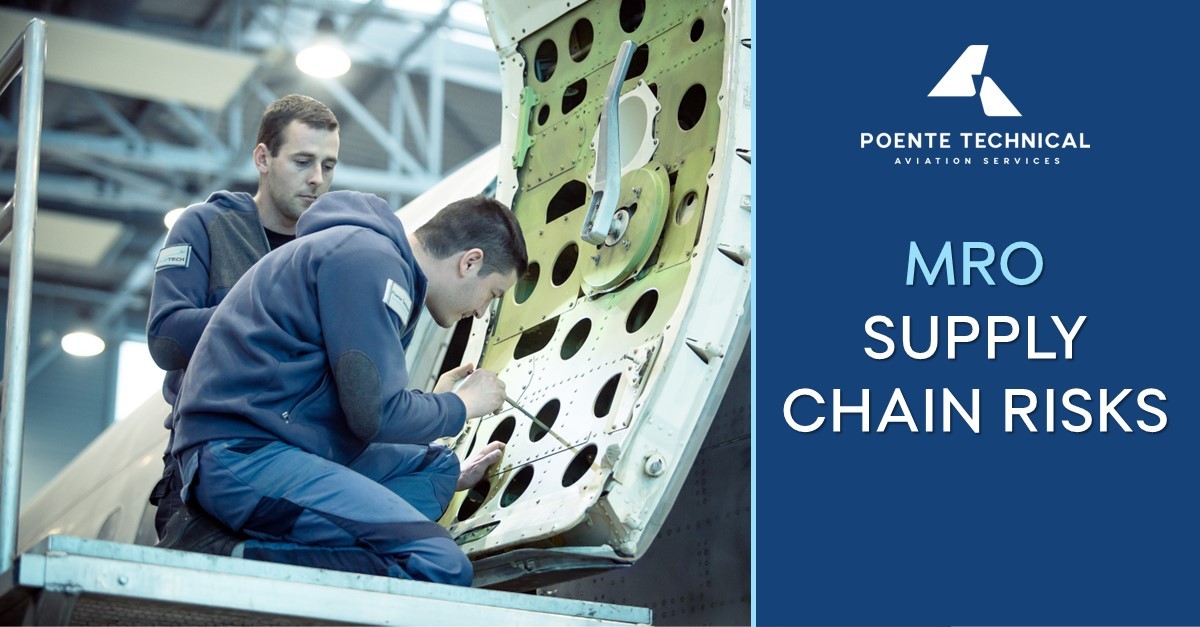
In aviation, turbulence isn’t just a mid-air challenge; it also describes the unpredictable disruptions that can strike the Maintenance, Repair, and Overhaul (MRO) supply chain. From parts shortages to shifting regulations, the aviation MRO industry faces growing pressure to stay resilient.
The European market, in particular, has felt the full impact of global instability, with geopolitical tensions, sustainability demands, and digital transitions reshaping every link in the supply chain.
In this post, we’ll explore what’s driving MRO supply chain risks today and, more importantly, how European MRO providers can anticipate and mitigate them before they threaten performance or profitability.
Understanding MRO Supply Chain Complexity
The aviation MRO supply chain is a web of interdependent players: manufacturers, logistics partners, repair facilities, airlines, and regulatory authorities. Unlike traditional supply chains, MRO operations depend on real-time coordination to keep fleets airworthy and compliant.
Every aircraft component, from turbine blades to avionics, has its own maintenance cycle, service bulletin requirements, and certification path. One delayed part or missing document can ground an aircraft, causing costly downtime and reputational damage.
In Europe, where safety and compliance standards are among the world’s strictest, MRO supply chain management demands both precision and flexibility. The complexity deepens when suppliers span multiple continents and rely on just-in-time delivery models that leave little margin for disruption.
Key Risks in the MRO Supply Chain (2025 and Beyond)
1. Geopolitical Uncertainty
The ongoing geopolitical fragmentation has led to export restrictions, fluctuating tariffs, and higher logistics costs. The war in Ukraine, trade tensions between the US and China, and regulatory divergence after Brexit have reshaped how MROs source parts and materials.
2. Component Shortages and Logistics Bottlenecks
The post-pandemic rebound in air travel has created record demand for parts, but global logistics remain strained. Semiconductor shortages, long lead times for engine components, and limited freight capacity all contribute to extended turnaround times.
3. Regulatory and Sustainability Pressures
The EU’s Green Deal and upcoming carbon reporting rules require MROs to track emissions throughout their operations, including those from their supply chains. This adds complexity but also creates opportunities for greener sourcing and maintenance practices.
4. Digital Transformation Challenges
While predictive maintenance and AI-driven analytics offer huge potential, integrating them into legacy MRO systems remains difficult. Many organizations struggle to harmonize data across fleets, suppliers, and maintenance records.
5. Talent and Skills Gaps
The shortage of licensed engineers and technicians across Europe poses a growing threat. Without skilled labor, even the most advanced digital systems cannot deliver reliable maintenance outcomes.
Its success lies in constant innovation while keeping the aircraft versatile and cost-efficient. From the early 737-100 to the latest 737 MAX, Boeing has tailored the plane for different markets without losing its reputation for dependability.
Effective Mitigation Strategies for MRO Supply Chains
Diversify Suppliers and Regionalize Stock
Building multiple supplier relationships within and outside the EU reduces reliance on a single source. Establishing regional stock hubs in strategic locations, such as Toulouse, Hamburg, or Warsaw, can significantly reduce downtime.
Invest in Digital Integration
Modern MROs leverage ERP and predictive maintenance systems to maintain end-to-end visibility. AI algorithms can forecast parts demand months in advance, preventing shortages before they occur.
Prioritize Sustainability and Circular Economy Models
Reusing, refurbishing, and recycling aircraft parts not only cuts costs but also aligns with EU sustainability goals. Circular economic initiatives are fast becoming a competitive advantage in European aviation.
Upskill the Workforce
Training programs focused on digital literacy and cross-domain expertise can bridge the talent gap. Collaborations with aviation academies and technical institutes help secure a steady pipeline of certified technicians.
Strengthening Supplier Partnerships
Long-term contracts and collaborative forecasting with suppliers improve stability and trust. Shared data access and transparency ensure faster decision-making in times of stress.
With more than 10,000 aircraft delivered and thousands more on order, the A320neo variant continues to push the boundaries of fuel economy and lower operating costs. It is especially popular among low-cost carriers across Europe and Asia.
The European Perspective
Europe’s aviation ecosystem is unique: tightly regulated, sustainability-driven, and globally connected. The European Union Aviation Safety Agency (EASA) continues to push for harmonized standards and digital documentation systems to enhance traceability across borders.
Meanwhile, Airbus and several leading MRO providers are investing heavily in AI-based logistics forecasting, automated inventory management, and carbon-reduction initiatives. These collective efforts are not only reshaping how parts move across the continent but also reinforcing Europe’s leadership in resilient aviation supply chains.
MRO supply chain risks can’t be eliminated, but they can be anticipated. The key lies in proactive data monitoring, supplier diversification, and the strategic use of technology. For European MRO providers, building resilience means balancing precision with adaptability, being ready for turbulence before it appears on the radar.
The future of MRO belongs to those who see disruption not as a threat but as a signal to evolve.